Who Takes Care of the Caregiver?

For Jennifer Jenkins, supporting her family means learning how to support herself
Jennifer comes from a long line of military veterans, part of a legacy of service that traces back to the American Revolution. “I’m proud of my roots,” she says, referring to the ten documented patriots in her family tree.
Generations of veterans followed, including her grandfather and father, who served in the U.S. Army Air Corps and the Air Force, respectively.
Jennifer prepared for a life in uniform, too, but an accident ultimately shattered her plans. She was devastated not to be able to carry on her family’s tradition of military service.
Years later, another incident would change her life again. This time, it led her back to the military — and down a path to become a nationally recognized speaker on multi-generational caregiving and an advocate for military caregivers and their families.
Juggling Identities
Jennifer grew up in Indiana, where her family celebrated its longstanding connection to American history. Service and patriotism were values she and her siblings learned at a young age.
But alongside that pride was the belief that struggles should remain unspoken. “I saw the effects of what happens when no one talks about things,” she says, alluding to her father’s experience serving during Vietnam.
As the oldest of three siblings, by more than a decade, Jennifer stepped into caregiving early. When her younger brother, James Smith, was 13, he moved in with her after their parents could no longer care for him.
At the time, Jennifer was also raising her own son, Grant. “I was 26, and I was raising my son and my brother,” she says. “I became more than his sister. I became his mom.”
She credits her faith and lessons from her grandmother for helping her navigate. “I learned both nurturing and coping skills from her,” she says.
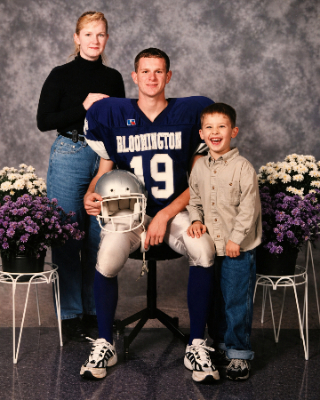
Keeping the Legacy Alive
For the next few years, life was hectic but stable. Jennifer juggled her work as a marketing and advertising professional with the demands of family. Then 9/11 happened.
“James came home from school on Sept. 11, and he was ready to join the military,” Jennifer recalls.
Since he was just 17, she encouraged him to stay focused on finishing school.
But the family legacy called.
James met with an Army recruiter and came up with a plan to graduate early to serve his country. As she was his legal guardian, Jennifer signed the papers that allowed him to enlist.
“It was bittersweet. I was proud of him but also feared the unknown.”
The Call That Changed Everything
In 2004, James deployed to Iraq with a Stryker brigade combat team.
Communication was sparse. Jennifer, like many Americans, had limited information.
My story matters. And it can help someone else.
Driving to work one day in late January 2005, her phone rang. It was a number she didn't recognize.
“It had a plus sign on the caller ID. I thought it was spam. I almost didn’t answer,” she admits.
The connection is poor. The words come in fragments. “… brother … explosion … IED ...”
Her mind goes to the worst-case scenario. “I thought he was dead.”
Then, suddenly, James was on the line. “He said, ‘I’m sorry. I got hit.’”
With tears in her eyes, she adds, “he survived the blast, but from that moment on, his future was vastly different.”
A New Identity
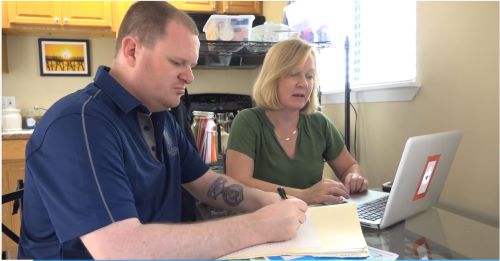
James’s injuries were severe, including a traumatic brain injury (TBI), spine injury, partial hearing and vision loss, and internal organ damage. He had other wounds, too, both visible and invisible; that would take time to understand fully.
As his next of kin, Jennifer suddenly found herself thrust into a new role.
Overnight, she became a military caregiver and advocate.
“Stepping into that role for my brother pushed me into uncharted waters,” Jennifer says. “When you’re thrown into it, it really shocks your system. It made me fear the future, tested my limits, and forced me to confront my vulnerabilities.”
Every day was different, but also the same. Jennifer struggled to make sense of a health care system that wasn’t easy to access, especially as a sibling. “People didn’t recognize me as a caregiver because I wasn’t his spouse or parent,” she recalls.
Pushing Away Support
Caregiving became all-consuming as Jennifer navigated seemingly endless paperwork, appointments, and medications. She tried to manage the day-to-day realities of James’ recovery, and all while trying to juggle work and motherhood and cope with the guilt she felt.
“He was physically present but changed. And I was angry at myself. I kept thinking, ‘What if I hadn’t signed those papers for him?’”
Jennifer held onto hope that life would return to how it was, but as the years passed, the routine remained. When a new problem arose, Jennifer attacked it with tenacity. “But I kept wondering, ‘What’s next for him?’"
The demands of caring for her brother took an emotional toll. Over time, she pulled away from coworkers. From church. From friends.
“I slowly descended into isolation,” Jennifer says. “I had a whole life before this. Now, I didn’t know who I was.”
Being Open to Something More
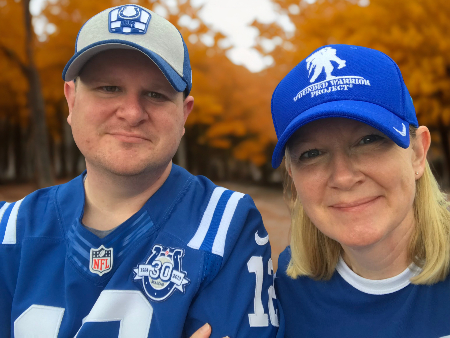
It would take almost seven years before Jennifer found support for her family – and was able to redefine herself.
Jennifer and James were introduced to Wounded Warrior Project® (WWP) while her brother was still in the hospital. But neither engaged at the time.
WWP® stayed in touch through mailers, phone calls, and invitations to events with other warriors and their loved ones. “They continued to offer support. I kept saying, ‘I’ve got this. I’m strong.’ Clearly they knew something we didn’t,” she recalls.
The turning point came when Jennifer’s then-teenage son, Grant, answered a phone call. He accepted an invitation for the family to attend a WWP connection event at the Chicago Air and Water Show.
When Jennifer found out, she was anything but enthusiastic. Rather, she felt overwhelmed just thinking about the logistics of getting there. She made a list of every reason they shouldn’t go.
But they went. She smiles at the memory.
“It was good to see my son engaging with other military teens, my brother talking to other warriors,” she says.
A Fall from Grace
After the WWP event, Jennifer slowly began to let others in. She joined an online community and helped James connect with other warriors.
“From the outside, what everybody else saw was a loving sister, accepting responsibility, and doing a great job to care for a warrior who had sacrificed and was trying to get to a new normal,” she says.
I had a whole life before this. Now, I didn’t know who I was.
But behind the scenes, Jennifer was struggling. “I was juggling a lot — raising my son, caring for my brother, trying to work when I could. I was overwhelmed, exhausted, and couldn’t put into words what I was feeling.”
One winter night, after James took a fall, a misunderstanding at a local health care facility forced Jennifer to drive through ice and snow to get him to another hospital. Frustrated and confused, Jennifer shared her feelings in a virtual peer support group.
“Isolation magnifies challenges. I got to a place where I couldn’t do it anymore,” she says, tearfully.
A fellow warrior recognized her post as a cry for help. “He came to the hospital, and contacted Wounded Warrior Project’s mental health team, who got to work immediately to get me connected with support,” she says.
“He also stayed with us through the night to make sure we both got the help we needed,” she recalls.
The Magic of Connection
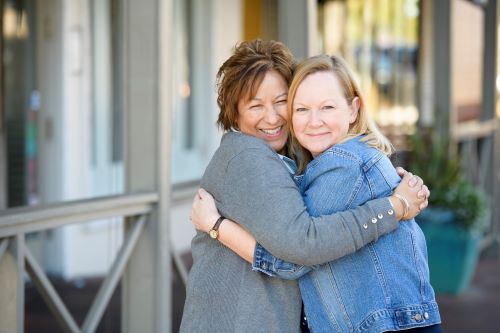
As she remembers the desperation of that winter day, Jennifer smiles at the realization that WWP became the bridge that helped her realize she wasn’t alone.
“I was introduced to my peers, to other caregivers, and their warriors. That was magic,” she says. “That saved my life.”
Connection was just the beginning.
At a WWP wellness retreat in Colorado, Jennifer began to understand her experiences in a new way.
“I was tired all the time, just exhausted. But it was more than fatigue,” she says. “I was empty. I didn’t have a job. I didn’t have support. I didn’t know what I needed, but I knew I had to make a big change.”
For the first time, Jennifer learned the language to describe what she was feeling: “They called it caregiver burnout.”
With support from WWP experts and other caregivers, Jennifer gained tools to help her manage things she’d never prioritized before — her sleep, her mental health, nutrition, movement, and respite time.
She also leaned on the Warriors to Work program to help her find suitable employment that would fit around her caregiver schedule.
Tips to Thrive as a CaregiverDuring her presentations, Jennifer reminds audiences that small, intentional steps can help them thrive in life. She encourages other caregivers to:
|
“I was the leader of this family. I had to learn how to ask for help — and how to accept it if we were going to thrive,” she says.
The family got engaged with WWP's Independence Program, which offers customized services to warriors and their caregivers, including helping them create a life care plan.
Jennifer admits there were still challenges, but WWP helped her better carry the weight. Forming deep friendships with other caregivers helped.
“Connection fosters resilience and healing,” she says.
Discover opportunities to connect with other caregivers at WWP.
A Backpack of Lessons
“When you’re thrown into trauma, you forget all your coping skills. You’re trying to fit chaos into your world. Wounded Warrior Project helped me learn coping skills again and how to better navigate uncertainty,” Jennifer says.
Those tools became critical when Jennifer’s son Grant decided to join the military and sustained an injury during training.
“I could have been pulled back into crisis. But I wasn’t,” she says. “I know where my tools are. I always have them in my backpack.”
Wearing both her mom and caregiver hats, she helped Grant navigate his recovery — but this time, with a new approach.
“We sought support from the Wounded Warrior Project in the beginning. They were with us every step of the way,” she says proudly.
Redefining Support and Caregiving

Jennifer’s experiences with her brother opened the door to a new passion: changing people’s understanding of who caregivers are.
“Caregivers aren’t just spouses,” she says. “They’re siblings. They’re parents. They’re children. They are the reason our loved ones can live the lives they deserve."
In 2016, Jennifer joined Wounded Warrior Project as part of its national speaker team, traveling across the country to bring awareness to the challenges veterans — and their caregivers — face.
Today, she advocates for broader recognition and support systems for those who don’t fit traditional caregiver definitions and often face gaps in services and resources. She relies on her lived experiences serving as a guardian, caregiver, and family support member.
“My story matters,” she says. “And it can help someone else.”
Learn how to book Jennifer to speak at an event.
Contact: Cynthia Weiss – Public Relations, cweiss@woundedwarriorproject.org, 904.738.2589
About Wounded Warrior Project Wounded Warrior Project® (WWP) is the nation’s leading veterans service organization, focused on the total well-being of post-9/11 veterans, active-duty service members, and their families. Our programs, advocacy, and awareness efforts help warriors thrive, provide essential lifelines to families and caregivers, and prevent veteran suicides. Learn more about Wounded Warrior Project.

When a loved one is ill or injured, their caregivers are often the ones providing essential support and compassion to help them manage daily life. However, caregiving has challenges, including...

Jenna Malone didn’t realize how much her husband Issac was hurting until she walked in on him about to take his own life. Fortunately, she was able to stop him at that moment, but the fear and...
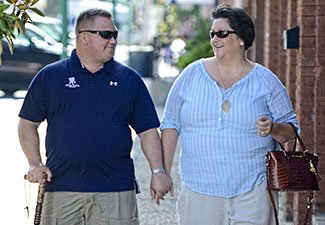
Wounded Warrior Project® (WWP) assists the most severely wounded veterans – and their caregivers – through its Independence Program. The veteran’s injury or illness does not have to be...